
What Makes Ghibli Backgrounds So Good? The Anatomy of Animated Magic
One of the most defining characteristics of Studio Ghibli’s art direction, pioneered by artists like Kazuo Oga, is the elevation of everyday objects and settings.
Instead of focusing solely on grand, sweeping vistas, Ghibli artists spend hours painting the rust on a bicycle, the damp moss on a stone wall, or the chaotic clutter of a lived-in bedroom. They understand that perfection feels artificial. By adding scuff marks, uneven lighting, and signs of wear, the environments feel grounded and real.
As one passionate fan noted online, “They can capture the magic in the mundane. The worlds can be fantastical, yet feel so real, as if you could step into them at any moment.” It is this precise attention to the ordinary that makes the extraordinary elements of the films feel believable.
If you are curious about the technical definition of this aesthetic and its history, read our deep dive on what is ghibli art.
Nostalgia for Places You’ve Never Been
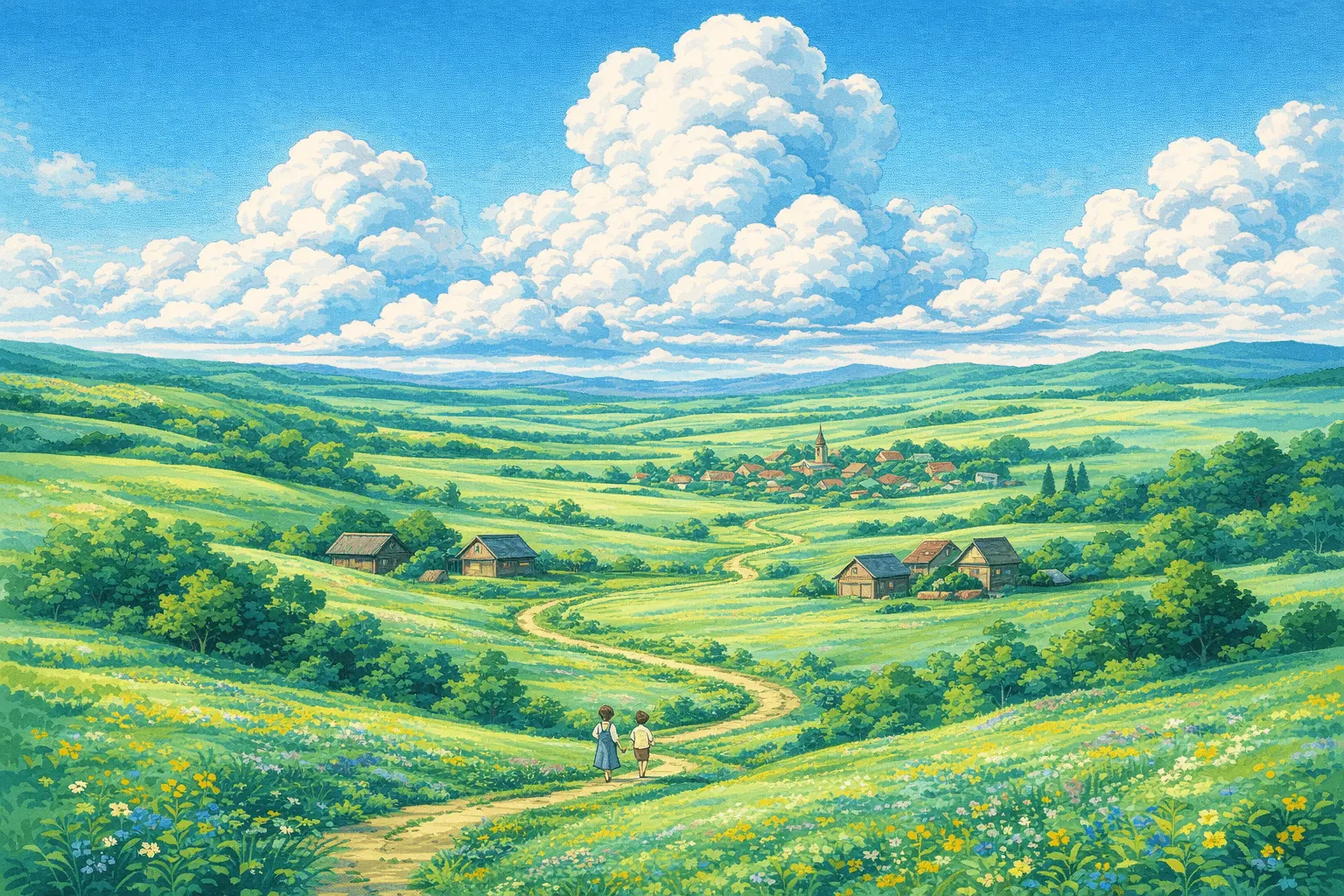
Ghibli backgrounds excel at evoking a profound sense of peace and nostalgia, particularly through their depiction of the countryside.
· Lush Color Palettes: The artists use vibrant, highly saturated greens and blues to depict nature, creating an idealized, almost dreamlike version of the Japanese countryside.
· Expansive Skies: Massive cumulonimbus clouds are a staple. They add depth, scale, and a sense of endless summer to the scenes.
· Serenity: The backgrounds often feature wide, open fields that capture a quiet, peaceful quality absent from city life.
Many viewers living in dense urban areas report feeling a deep sense of calm simply from looking at these painted landscapes. It allows them to experience the serenity of nature without ever leaving their screens.
If you want to bring this specific aesthetic into your own creative projects or turn your photos into this style, ghibli art ai offers specialized tools trained explicitly on these hand-painted watercolor techniques.
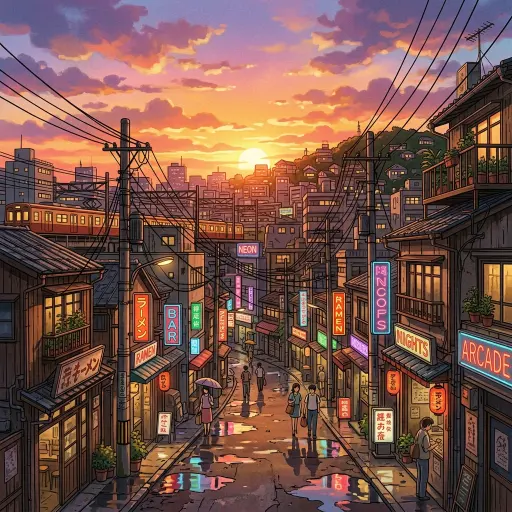
As documented in the Studio Ghibli Wiki on Kazuo Oga, director Hayao Miyazaki praised Oga’s natural talent for using green, noting Oga’s unique ability to render dense forests with varied tones that represent shifting forest light. Rather than pursuing photorealistic accuracy, Ghibli backgrounds focus on how a forest feels. This painterly simplicity makes the scenes visually readable in seconds during fast-paced animation cuts. If you are interested in exploring how these organic painting techniques define the visual identity of hand-drawn animation, read our deep dive on what is ghibli art.
Designing Your Own Ghibli-Inspired Layout
Practical Layout Standards for Achieving Animated Magic
Creating a Ghibli-inspired background layout requires dividing your canvas into three distinct layers (foreground, midground, and background) while applying a strict atmospheric scale to control contrast and sharpness. Perspective layering forms the foundation of traditional 2D animation layouts. To build a convincing scene, digital and traditional artists structure their layouts using three primary divisions: - Foreground: This layer features high contrast, sharp edges, and detailed dark values, usually painted with opaque, heavy brush strokes to represent physical proximity. - Midground: This layer contains the primary green saturation and structural shapes, serving as the main stage for characters and action. - Background: This layer uses low contrast, diffused edges, and cool gray-blue tints to simulate atmospheric humidity and light scattering.
According to tutorials and style guides on the ArtStation Ghibli Style Analysis, recreating this traditional layout digitally requires utilizing custom gouache brushes with high paper texture simulation. This physical texturing mimics the tooth of heavy watercolor paper, helping artists avoid the flat, smooth look that often betrays digital illustrations.
Comparing Traditional Layouts and Digital Backdrops
The traditional methods of Studio Ghibli create visual results that contrast sharply with modern, purely digital animation backdrops. The table below outlines the core visual differences:
Comparative Dimension
Ghibli Traditional Media (Poster Color)
Modern Digital Rendering
Tactile Texture & Finish
Matte texture that absorbs light organically on physical paper
Flat and glossy pixels that reflect screen light
Atmospheric Depth & Humidity
Soft wet-into-wet washes that diffuse values naturally
Digital gradients that often look overly uniform and sterile
Production Speed & Revision Cost
Slow painting speed with high manual revision expenses
High-speed rendering with instant digital layer adjustments
Visual Warmth & Nostalgia
Imperfect hand-crafted details with high organic charm
Pristine geometric shapes that can feel cold and artificial
Frequently Asked Questions
What Nicker poster color alternatives are available in the West?
Traditional Nicker paints can be hard to source outside Japan. High-quality gouache alternatives like Holbein Artists’ Gouache or Talens Extra Fine Gouache offer similar high-pigment, ultra-matte finishes that absorb light beautifully.
What is the best digital Gouache brush pack for the Ghibli look?
To replicate Oga’s textures digitally, Procreate artists highly recommend the Takeda Gouache Preset Pack, while Photoshop users prefer Kyle’s Real Gouache Brushes. Ensure you choose brushes with high grain and wet-edge simulation.
Which paper type is most authentic for Kazuo Oga’s style?
The Ghibli art department famously paints on Muse Watson Paper (300gsm cold press watercolor paper). This paper features a medium-coarse “tooth” (texture) that holds heavy poster color washes without warping.
How does the double-sided wetting technique prevent paper buckling?
Wetting both sides of heavy paper allows the cotton fibers to expand uniformly. This prevents the paper from curling or buckling when heavy layers of wet poster color are applied, keeping the canvas flat during high-speed production.
How can I simulate atmospheric humidity in digital painting software?
You can simulate this by setting a separate background mist layer to Multiply or Hard Light at 15% opacity, and applying a soft Gaussian blur filter to make distant mountain silhouettes lose edge contrast.