
Why Everyone Loves the Ghibli AI Trend (And Why Artists Hate It)
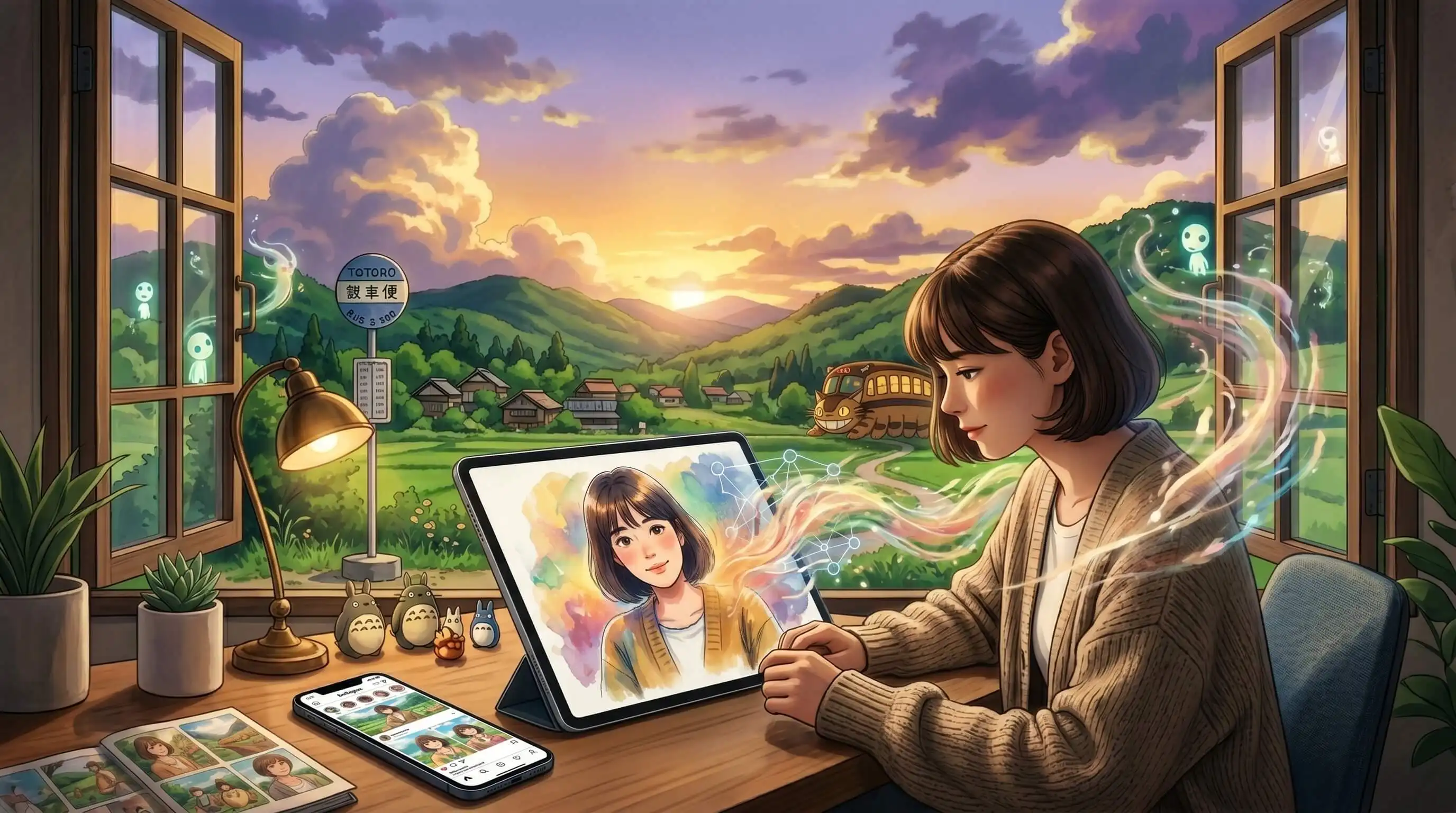
Have you noticed your social media feeds suddenly looking like animated movie scenes? Millions of people are transforming their daily selfies into the warm watercolor aesthetic of Studio Ghibli. But this explosion of Ghibli AI art is not just a passing visual fad. It exposes a desperate psychological cry for comfort and has sparked a major battle over the future of human craftsmanship.
Here is the unfiltered truth about why the Ghiblification trend took over the internet.
How the Trend Started
Anyone Can Do It Now
Historically, recreating a Studio Ghibli frame required years of deep animation training. Today, the technical barriers are completely gone. Mainstream tools now allow anyone with a smartphone to achieve the look instantly.
Pro Tip: When experimenting with AI generators, do not just type “Ghibli style.” Instead, focus on specific environmental keywords to recreate the studio’s true atmosphere.
Here is a highly effective, tested prompt template you can use:
· “Subject + anime style, lush green watercolor, Studio Ghibli aesthetic, soft overcast lighting, highly detailed.”
If you are curious about the technical backend of how neural networks actually process these specific visual tokens, read this deep dive on what is Ghibli Art AI and how does it work.
Why We Need Comfort
A Break From Screens
The core reason this trend went viral has little to do with novelty. It has everything to do with severe mental burnout. Moden digital life leaves us exhausted. Studio Ghibli films counter this by focusing on nature and quiet moments, utilizing the Japanese concept of Ma (negative space).
According to psychologists tracking the trend, Ghibli’s lush, nature-inspired landscapes actually activate the brain’s “default mode network.” This specific brain wave state is associated with calm reflection and deep healing (Source: Psychology Today Analysis).
The blend of retro animation with your personal living room acts as a “digital comfort blanket.” It triggers nostalgia, which neuroimaging studies show activates your brain’s reward centers.
Why Real Artists Are Angry
Miyazaki’s Warning
While casual users love the trend, purists are furious. Studio Ghibli co-founder Hayao Miyazaki has famously called AI animation an “insult to life itself.” His argument is clear: True art must carry the pain and memory of the artist. AI strips away the humanity that makes authentic Ghibli art moving.
The Legal Problems
This battle has spilled into the legal system. Tech companies trained their models on Miyazaki’s life work without permission. However, those generating the images cannot claim ownership. As of early 2026, the U.S. Supreme Court declined to hear Thaler v. Perlmutter, establishing that human authorship is a bedrock requirement for copyright (US Copyright Law Tracking).
Why Real Art is Now More Valuable
The Value of Human Touch
Here is the biggest irony. You might assume that free, instantaneous Ghibli art would ruin the studio’s business. In reality, it did the exact opposite. Because we are drowning in AI images, actual human craftsmanship has become a luxury.
We call this the “Human Premium,” and the financial data proves it: In March 2025, the 4K IMAX re-release of Princess Mononoke grossed over $10 million. This massive success led to an expanded partnership between GKIDS and IMAX for a full 2026 slate (IMAX Box Office Reports).
How Brands Can Use This Trend Safely
Brands trying to capitalize on the “cozy aesthetic” must be extremely careful. Real YouTube users are highly critical of the trend: User @Zaiomi-3113 expressed: “All of my friends and family are turning themselves into Ghibli pics… but Studio Ghibli art is actually drawn by a person.” User @kizanko noted: “I want Ai to do my taxes, not my hobbies.”
If you want your brand to safely evoke the Ghibli feeling without angering consumers, follow this exact workflow: 1. Identify natural, green-heavy color palettes inside your existing product line. 2. Remove fast jump cuts from your video ads to embrace “Ma” (negative space). 3. Highlight the human creators behind your product rather than using generative image filters.
Will This Trend Last?
The Ghiblification trend forces us to ask a hard question: Are we falling in love with the technology, or are we just desperately seeking the peace that human artists created? While AI can mimic the brushstrokes in seconds, it cannot replicate the soul behind it.
Frequently Asked Questions (FAQ)
What is the Ghibli AI trend?
It is a viral trend where users utilize AI tools to transform their personal photos into the famous watercolor animation style of Studio Ghibli.
Why is Hayao Miyazaki against AI?
He views animation as a reflection of human struggle and emotion. He criticized AI as an “insult to life itself” because it bypasses human experience.
Can I copyright an AI-generated Ghibli image?
No. The U.S. Supreme Court upheld in 2026 that human authorship is strictly required for copyright protection.
Why are Ghibli movies so visually comforting?
They activate the brain’s default mode network by utilizing “Ma” (negative space), nature, and slow domestic routines.
Did the AI trend hurt Studio Ghibli?
No. It increased the value of authentic works. Recent 4K IMAX re-releases in 2025 and 2026 broke box office records as fans sought out human-crafted art.